


Microsoft Actor
 | |
 Screenshot of Microsoft Bob, a Microsoft Actor 1.0 program using Rover. | |
| Name | Microsoft Actor |
|---|---|
| Developer(s) | Microsoft |
| Initial release | March 10th, 1995 (31 years ago) |
| Latest version | 2.0 |
| Latest version release date | October 1996 (29 years ago) |
| Written in | C++ |
| Operating system | Microsoft Windows, Classic Mac OS |
| Successor | Microsoft Agent |
| Discontinued? | Yes |
Microsoft Actor is a discontinued animated assistant technology developed by Microsoft as the direct predecessor to Microsoft Agent. It provided a lightweight virtual assistant system for scripted animated characters across Windows 3.x and later and Classic Mac OS (specifically Microsoft Office 98 and 2001). Actor characters were stored in .ACT files, which contained all assets, sound effects, and all metadata contained inside the character, and were compiled from .UCH files, the Microsoft Actor equivalent of Microsoft Agent Character Definition (.ACD) files.
The first version of Microsoft Actor, 1.0, debuted with Microsoft Bob in 1995, launching with 12 Microsoft Actors before Microsoft Bob 1.00a introduced the rest of the Microsoft Actor 1.0 characters. Microsoft Actor 2.0 debuted with the release of Microsoft Greetings Workshop following the cancellation of Microsoft Bob 2.0, and was later also used in Microsoft Office 97 and early installments of the Microsoft My Personal Tutor series before being replaced entirely by Microsoft Agent in 1997.
Overview
Microsoft Actor powered the animated assistants that appeared in Microsoft Bob, Greetings Workshop, Office 97, Office 98, and Office 2001. The following assistants that were developed are as follows:
Microsoft Actor 1.0
- Baud
- Blythe
- Chaos
- Chaz
- Dot
- Hank
- Hopper
- Java
- Lexi
- Lucy
- Orby
- Ruby
- Rover
- Scuzz
- Shelly
- Will
- Worm
- ZSpeaker
- ZVisible
Microsoft Actor 2.0
- Bosgrove (Mac OS only)
- Clippit
- Dot
- Earl
- F1
- Genius
- Hoverbot
- Kairu
- Office Logo (two variants)
- Max (Mac OS only)
- Mother Nature
- PowerPup
- Professor P.T. Presto
- Rocky
- Scribble
- Saeko Sensei
- Will
File format
- Main article: Actor Character Table (file format)
Unlike Microsoft Agent characters which are commonly found in the .ACS file format, Actor characters instead use the .ACT extension (Actor Character Table). These binary files, while similar to .ACS files in nature, are vastly different under the surface, even between 1.0 and 2.0 Actor versions. However, both versions of .ACT utilize .WMF vector files for the graphics, .WAV files for the sounds, and contain unique metadata like description text and internal version markers.
Versions
There are currently two known versions of Microsoft Actor:
| Version number | Date | Confirmed? | Programs |
|---|---|---|---|
| 1.00 | March 10th, 1995[1] | Yes | Microsoft Bob |
| 2.00 | October 1996[2] | Yes | Microsoft Bob 2.0, Microsoft Greetings Workshop 1.0 & 2.0, Microsoft Office 97, Microsoft Office 98, Microsoft My Personal Tutor, Microsoft Office 2001 |
Programmability
Microsoft Actor programs can be developed with the Utopia Custom Controls (UCC.VBX), a 16-bit Visual Basic extension compatible with Visual Basic 3.0 and partially Visual Basic 4.0. Unlike the Microsoft Agent Control, the Utopia Custom Controls consisted of multiple smaller controls , including the the Actor control (which displays the actor), the Podium control (a podium with an exit button), and the Rgnwnd control (word balloon) to name a few. However, official documentation for these controls is unavailable, making these controls difficult to program with.
In 2025, Frontier Actor began development, which re-implements some Utopia Custom Controls via the .NET Framework to allow for modern applications to use Microsoft Actor files.
Gallery
-
 Screenshot of Microsoft Bob, which is the first Microsoft Actor program.
 -
 The Utopia Custom Controls upon being loaded inside the toolbox in Visual Basic 3.0.
 -
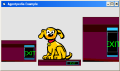 A Visual Basic 3.0 application with an Actor control and three Podium controls.
 -
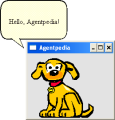 A Visual Basic 3.0 application featuring an Actor control and the Rgnwnd control.
 -
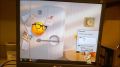 Microsoft Actor 2.0 being used in Microsoft Bob 2.0 (unreleased).
 -
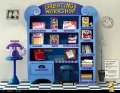 Microsoft Actor 2.0 being used in Microsoft Greetings Workshop 2.0.
 -
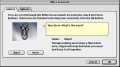 Microsoft Actor 2.0 being utilized in Microsoft Office 2001 for classic Mac OS.
 -
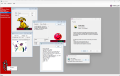 Microsoft Actor characters being loaded with Frontier Actor, a re-implementation of Microsoft Actor for modern operating systems.
 -
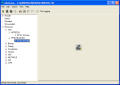 Microsoft Actor's icon as an unused resource inside of Microsoft Bob's Checkbook application.


Trivia
- Microsoft Actor was the direct predecessor to Microsoft Agent and shares many conceptual similarities.
- Microsoft Actor files are closely related to other files compiled by the Utopia Animation Editor, including .ANI and .BTN, all of which share a very similar file structure.
- Microsoft Actor 1.0 is supported by Windows 3.1 or later while Microsoft Actor 2.0 is supported by Windows NT 3.51 SP5 or later[3] and Mac OS 7.5 to Mac OS X Tiger 10.4.11.[4]
- Microsoft Bob, the first program that utilized Microsoft Actor, was considered by Microsoft a visible product failure.[5]
- Although Microsoft Actor for Classic Mac OS uses the same technology as its Windows counterpart, the Mac OS-compiled .ACT files cannot be loaded on Windows nor can Windows-compiled .ACT files be loaded on a Mac.
References
- ↑ https://web.archive.org/web/20050814234847/http://support.microsoft.com/gp/lifeobsoleteproducts
- ↑ https://news.microsoft.com/source/1996/09/11/microsoft-and-hallmark-connections-team-up-to-offer-microsoft-greetings-workshop/
- ↑ https://learn.microsoft.com/en-us/previous-versions/tn-archive/cc749816(v=technet.10)?redirectedfrom=MSDN
- ↑ https://technet.microsoft.com/en-us/library/cc749816.aspx
- ↑ https://technet.microsoft.com/en-us/magazine/2008.07.windowsconfidential.aspx
| Software |
|  | ||||
|---|---|---|---|---|---|---|
| Characters |
| |||||
| File formats | ||||||