


Microsoft Bob
 | |
 Default home window of Microsoft Bob with Rover selected as the Microsoft Actor. | |
| Name | Microsoft Bob |
|---|---|
| Developer(s) | Microsoft Corporation |
| Initial release | March 10th, 1995 (31 years ago) |
| Latest version | 1.00a |
| Latest version release date | August 30th, 1995 (30 years ago) |
| Written in | Visual Basic 3.0, Visual C++ |
| Operating system | Microsoft Windows |
| Successor | Microsoft Bob 2.0 (unreleased) |
| Discontinued? | Yes |
Microsoft Bob is a consumer-oriented graphical shell and application suite developed by Microsoft Corporation that transforms the Windows desktop as a "house" of rooms filled with clickable objects that launch programs and tasks.[1] Microsoft Bob shipped with animated assistants like Rover that utilized technologies like word balloons and various other interactions.[2]
Microsoft Bob was released on March 10th, 1995 to mostly negative reactions before being discontinued in 1996.[3]
Overview
Microsoft Bob was designed to make PC activities easier for novice users by replacing traditional icons and menus with a room-based metaphor, with users being able to move between rooms and interact with everyday objects representing applications. These rooms and decorations were customizable, and Bob supported multiple user profiles, with a guest profile option also available.
The interface of Microsoft Bob is guided by Microsoft's first implementation of a virtual assistant API, Microsoft Actor, a predecessor to Microsoft Agent that allowed for animated characters to provide contextual help and feedback in speech balloons. Microsoft Actor characters could be compiled in the Utopia Animation Editor, which was removed from Microsoft Bob before the RTM release.
Upon release, Microsoft Bob was criticized in the press for being slow, and less helpful than advertised, with particular negative attention placed on the overall design of the environment.[4]
Development
Microsoft Bob 1.0
The earliest build of Microsoft Bob, Beta 1 build 1116 was compiled on November 30th, 1994, and was codenamed "Utopia Home". Most of the initial Microsoft Actors present in this build were already complete, with this build differing from the RTM build in name and with the various bugs present in it, such as some programs crashing as well as visual issues on some color modes.
The next available build is pre-RTM build 1303, compiled on January 3rd, 1995, which was first officially discovered in the TMAFE Discord community inside of the archived Microsoft Bob SDK, and is the first build to utilize the RTM Microsoft Bob icon. Just like Beta 1, Microsoft Bob programs can be launched without the home application.
After this build is build 1318, another pre-RTM build of Microsoft Bob 1.0, compiled on January 19th, 1995. The 1318 build fixed a lot of issues that were present in past builds, such as disallowing Bob applications from opening unless the main Home application was also open. Additionally, build 1319 was compiled right after this one, with the only mention of its existence being from the Utopia Mail Subsystem DLL file (UMLXP32.DLL).
The final RTM build of Microsoft Bob, build 1329, would be compiled 11 days later on January 30th, 1995, and be officially released in March that year.
The next available build, build 1927, is an updated RTM release of Microsoft Bob that comes on the Gateway 2000 OEM CD, with that version in particular featuring additional rooms.
Microsoft Bob 2.0
Main article: Microsoft Bob 2.0
Inside of the Microsoft Bob magazine, Microsoft Corporation provides a method of contact to send suggests for the "next version of Microsoft Bob".[5] However, likely due to the negative reactions the first version of the program received, it was never released, though screenshots of such a version were added to MSBob.org.[6] Upon being scrapped, it is likely that the updated controls for Microsoft Bob 2.0 were used in Microsoft Greetings Workshop 2.0, with the program containing what appears to be an updated versions of the same "Podium" (exit) control, a similarly styled word-balloon control, and an updated version of the same Button control.
Actor 1.0 differences
Microsoft Bob features the first iteration of Microsoft Actor, which varies from the Microsoft Actor 2.0 assistants in Office 97, 98, and 2001. The Actor logic is stored in "UTOPIA.DLL", which features various functions that the Microsoft Actor Control (a 16-bit VBX) uses. For example, one of these functions is the OpenActor function. Additionally, Microsoft Actors could be controlled by various methods programmatically with the 16-bit VBX, such as the Action method that plays an animation, similar to the Microsoft Agent Control's Play method.
Gallery
-
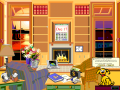 Default room of Microsoft Bob beta 1 build 1116.
 -
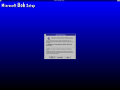 Setup window of Microsoft Bob build 1303, where the setup identifies the program by the final name.
 -
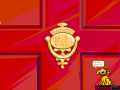 Entrance of Microsoft Bob build 1303.
 -
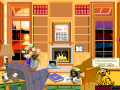 Default room of Microsoft Bob build 1303.
 -
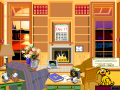 Default home window of Microsoft Bob RTM (build 1329).
 -
 Previous icon that was used until build 1303.
 -
 Final icon that was introduced in build 1303.
 -
 Front of the retail copy of Microsoft Bob.
 -
 Splash screen logo of Microsoft Bob.
 -
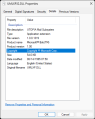 UMLXP32.DLL, a file from Microsoft Bob RTM confirming a build 1319.


Trivia
- Microsoft Bob was the first program developed by Microsoft to use virtual assistants to guide users.
- The version of Microsoft Actor used in Microsoft Bob is version 1.0.
- Microsoft Bob assistants can work on Microsoft Actor 2.0 programs like Office 97.
- However, Microsoft Actor 2.0 assistants from Office 97 cannot work on Microsoft Bob.
- Rover, the mascot of Microsoft Bob, would later be used in the Windows XP Search feature.
- Microsoft Bob's equivalent of the "Microsoft Agent Server" is "UTOPIA.DLL", which contains the logic for Microsoft Actor 1.0 characters.
- They also share syntax similarities, with Microsoft Actor 1.0 animations being loaded by Actor.Action = x, with x being the animation number, while Microsoft Agent uses Agent.Play(animationName), with animation name being the name of the animation.
- As Microsoft Bob is a 16-bit program, it cannot run natively on 64-bit Windows without the use of extra software.
- It is likely that components of the unreleased Microsoft Bob 2.0 were re-used in the Microsoft Greetings Workshop 2.0 program.
References
- ↑ https://zisman.ca/Articles/1995/Bob.html
- ↑ https://technologizer.com/2010/03/29/microsoft-bob/index.html
- ↑ https://content.time.com/time/specials/packages/article/0,28804,1857340_1857341_1857349,00.html
- ↑ https://www.pcworld.com/article/535838/worst_products_ever.html
- ↑ https://archive.org/details/the-bob-magazine-1995/page/n31/mode/2up?q=next+version
- ↑ https://msbob.org/index.php/community/314-marisa-giancarla/photos/album?albumid=22
| Software |
|  | ||||
|---|---|---|---|---|---|---|
| Characters |
| |||||
| File formats | ||||||